
 13 고객 리뷰

간결한 내용
GCP-SOE-B 덤프문제는 다년간의 다양한 시험에 대한 분석을 바탕으로, 시험문제의 주요 발전 경향에 따라 응시자가 직면할 어려움을 정면 돌파하기 위하여 전문가들이 자신만의 경험과 끊임없는 노력으로 제작한 최고품질의 시험자료입니다.다른 교육 플랫폼과 달리 Security Operations Engineer (Beta) 시험덤프는 오래된 문제는 삭제하고 새로운 문제는 바로바로 추가하여 덤프가 항상 가장 최신버전이도록 간결하고 눈에 잘 띄는 텍스트로 요약되어 있기에 덤프만 완벽하게 마스터 하시면 GCP-SOE-B 시험패스는 더는 어려운 일이 아닙니다.
진정한 시뮬레이션 환경
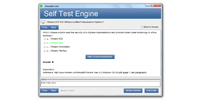
많은 응시자 분들이 처음 자격증 시험에 도전하는 것이라 시험보실 때 경험 부족으로 인해 시험시간에 너무 긴장하여 평소 실력을 발휘하지 못하는 경우가 있습니다.이를 피면할수 있도록 미리 Security Operations Engineer (Beta) 시험과 비슷한 환경에서 연습하는 훈련을 통해 실제 시험에서 긴장을 완화시키는 것이 좋습니다. 저희는GCP-SOE-B 실제 시험 시뮬레이션 테스트 환경에 해당하는 제품을 가지고 있습니다. 제품 구매후 자신의 계정에 로그인하시고 실제 시험 환경을 체험해 보시면 시험 환경에 적응되어 GCP-SOE-B 시험보실때 문제 푸는 방법을 모색하는 시간이 줄어들어 자신감이 생겨 한방에 시험패스 가능할것입니다.
우리의 Security Operations Engineer (Beta) 시험 덤프 문제는 최고품질의 시험대비 자료입니다. 전문가들이 최신 실러버스에 따라 몇년간의 노하우와 경험을 충분히 활용하여 연구제작해낸 자료라 해당 시험의 핵심문제를 모두 반영하고 있습니다.GCP-SOE-B 덤프로 시험을 준비하시면 시험패스는 더는 어려운 일이 아닙니다. GCP-SOE-B 시험에서 출제 가능성이 높은 문제만 정리한 최신 버전 자료라 가장 적은 문항수로 모든 응시자가 효율적인 시험공부를 할 수 있도록 하고 부담 없이 한번에 GCP-SOE-B 시험을 즉시 통과할 수 있도록 도와드립니다.
커리큘럼 소개
대부분의 분들에게 있어서 자격증 시험이 처음일 수 있으므로 자격증 시험과 관련된 많은 정보는 복잡하고 난해할수 있습니다. 하지만 자격증 취득 초보자들의 덤프공부 후기에 따르면 GCP-SOE-B 덤프는 시험의 모든 출제범위와 시험유형을 커버하고 있어 덤프에 있는 문제와 답만 기억하시면 Security Operations Engineer (Beta) 시험을 쉽게 패스하여 자격증을 취득할수 있다고 합니다. GCP-SOE-B 시험대비 덤프는 초보자의 눈높이에 맞추어 덤프를 사용하시는 분께서 보다 편하게 공부할수 있도록 엘리트한 전문가들의 끊임없는 연구와 자신만의 노하우로 최선을 다한 자료입니다.덤프의 도움으로 여러분은 업계에서 또 한층 업그레이드 될것입니다.
최신 Google Cloud Certified GCP-SOE-B 무료샘플문제:
1. Your company is adopting a multi-cloud environment. You need to configure comprehensive monitoring of threats using Google Security Operations (SecOps). You want to start identifying threats as soon as possible. What should you do?
A) Ask Cloud Customer Care to provide a set of rules recommended by Google to monitor your company's cloud environment.
B) Use curated detections from the Cloud Threats category to monitor your cloud environment.
C) Use Gemini to generate YARA-L rules for multi-cloud use cases.
D) Use curated detections for Applied Threat Intelligence to monitor your company's cloud environment.
2. You are an incident response engineer at an organization that uses Google Security Operations (SecOps). You recently started monitoring IOCS in Applied Threat Intelligence using YARA-L rules. You have discovered that there are more false positive alerts than expected, which is causing noise for the SOC team. You need to reduce the number of false positive alerts. What should you do?
A) Modify the YARA-L rules to use an indicator confidence score (IC-Score) of 60% and above.
B) Create a playbook that automatically tunes the IOC source if its indicator confidence score (IC- Score) is between 60% and 80%.
C) Implement curated detections instead of custom YARA-L rules.
D) Configure alert grouping for the most repetitive alerts.
3. Your organization uses Google Security Operations (SecOps) for security analysis and investigation. Your organization has decided that all security cases related to Data Loss Prevention (DLP) events must be categorized with a defined root cause specific to one of five DLP event types when the case is closed in Google SecOps. How should you achieve this?
A) Customize the Close Case dialog and add the five DLP event types as root cause options.
B) Create case tags in Google SecOps SOAR where each tag contains a unique definition of each of the five DLP event types, and have analysts assign them to cases manually.
C) Customize the Case Name format to include the DLP event type.
D) Create a Google SecOps SOAR playbook that automatically assigns case tags where each tag contains the unique definition of one of the five DLP event types.
4. You are responsible for selecting and prioritizing potential sources of data to integrate with Google Security Operations (SecOps). Your company has recently started using several Google Cloud services to increase security in its Google Cloud organization. You need to determine which logs should be ingested into Google SecOps to reduce the effort required to write detections. What should you do?
A) Use Google Threat Intelligence to gain insight about threat group behavior and support threat hunting activities.
B) Deploy a Bindplane agent to ingest event logs from Compute Engine VMs that provide endpoint visibility.
C) Integrate Security Command Center (SCC) into Google SecOps to ingest logs originating from the Google Cloud services.
D) Ingest Google Cloud Armor logs by using Cloud Logging.
5. Your organization recently implemented Google Security Operations (SecOps). You need to create a solution that allows the security team to monitor data ingestion into Google SecOps in real time. You also need to configure a solution that automatically sends a notification if one of the data sources stops ingesting dat a. You need to minimize the cost of these configurations.
What should you do?
A) Create Looker dashboards to visualize the data ingestion, and configure an alerting policy in Cloud Monitoring to send a notification in case of failure.
B) Create Looker dashboards to visualize the data ingestion, and configure an alerting policy in Looker to send a notification in case of failure.
C) Use Google SecOps SIEM dashboards to visualize the data ingestion and configure an alerting policy in Cloud Logging to send a notification in case of failure.
D) Use Google SecOps SIEM dashboards to visualize the data ingestion, and configure an alerting policy in Cloud Monitoring to send a notification in case of failure.
질문과 대답:
| 질문 # 1 정답: B | 질문 # 2 정답: A | 질문 # 3 정답: A | 질문 # 4 정답: C | 질문 # 5 정답: D |


 0
0
 0
0
 0
0
 0
0
